WIRED VS. WIRELESS SECURITY CAMERAS – WHICH IS THE BEST?

The types of security cameras can be characterized according to different criteria such as mount type and shape, lens type, environmental conditions, and features. Even through the turmoil of COVID-19, advances in security systems remain unaffected, with newer and better designs coming out every month.

One of the main characterization criteria is that of connectivity, which gives birth to the wired vs. wireless security camera debate.

We understand that there can be a lot of confusion around these two types of security systems and we know there is a lot to consider when deciding on choosing the best system for the security of your property.

Read on below to learn more. We have broken down the wired vs. wireless camera types, describing the pros and cons for each, helping you make a more informed decision about your property’s safety and security.

WIRED SECURITY CAMERAS

Wired security systems, also known as a DVR (digital video recorder) security system, are a combination of cameras and a recording device and are the most traditional form of CCTV, connected to a power source and the internet using a cable.

The cameras can be powered in two ways; through a separate cord connecting the power and internet, or by using a Power over Ethernet (PoE) cable, requiring just one cable providing both power and internet connection.

PROS OF WIRED SECURITY CAMERAS

  • Reliability
  • Little to no network interference
  • More secure
  • Consistent video and streaming quality
  • Supports large installations

The biggest possible advantage that wired security cameras provide is that of reliability. Due to the physical connection between the camera, recorder, and router through cables, the system is less susceptible to connectivity issues and interference from other devices.

The system also isn’t susceptible to bandwidth fluctuations due to the high-reliability factor, and the video quality remains great and consistent throughout. A 4K system will stream footage in 4K quality and will not fall to 720p due to poor reception – an important factor that guarantees high-quality surveillance.

Due to the system working on a closed network, it cannot be wirelessly hacked, which ensures that the data being recorded on the system will be secure and protected from hackers.

One thing to note here is that there is no guarantee of the system being 100% risk-free; there is a chance of the wires being cut by potential burglars and intruders, which is why it is ideal to completely conceal the wiring, hiding it from plain sight.

Wired security cameras are a great option if you have a large area to cover under surveillance. Since everything is hardwired, the system can be as expansive as need be, providing comprehensive coverage and the ability to support a large number of cameras to cover more space.

CONS OF WIRED SECURITY CAMERAS

  • Installation time
  • Invasive installation
  • Less flexible
  • Not portable
  • Power outages

The installation process and the time it takes to carry it out is one of the biggest drawbacks of wired security cameras. Due to the usage of all the cables, setting up the system might take longer than a wireless system. It might even require drilling holes in walls, which can be an issue if the property is rented or on lease.

In addition to that, since wired security cameras require access to a power outlet and internet via cables, they are less flexible and cannot be mounted just anywhere. The availability of a power source and the internet is mandatory.

Portability is another issue faced by wired camera users. Due to all the hardwiring involved in the installation process, moving or relocating the system can be very challenging and it is usually better to just invest in a new one rather than going through the hassle of moving the existing system.

Since the system is dependent on power supplied through the mains system of your property, it makes it vulnerable to stop working during power outages. A great way to combat this issue is to use backup batteries, ensuring everything always stays up and running.

WIRELESS SECURITY CAMERAS

Wireless security cameras are connected to a power source via a cable and connected to the internet over Wi-Fi, uploading the video to a local storage device or the cloud.

Version 1.0.0

The main difference between a wired and wireless security camera system is that the recorded footage in wireless systems is transmitted from the camera to the recorder wirelessly, whereas wired systems work entirely over cables. Both, however, require wired power.

PROS OF WIRELESS SECURITY CAMERAS

  • Ease of installation
  • Lower setup cost
  • More flexible
  • Portable
  • Scalable

Ease of installation is one of the main benefits of a wireless security camera, which is due to minimal cables involved, typically just one to connect the system to the power outlet to set up the system.

Since the time and effort required to carry out the task is less, the total charges for setting up a wireless security camera system are generally less than for a wired system.

They are also more flexible in terms of installation locations since they connect over Wi-Fi, requiring access to only a power source. However, they do need to be close enough to a router to maintain a strong internet connection.

Moving them around is relatively easier too since they tend to be lightweight and portable, and it is easier to add additional cameras to the system.

CONS OF WIRELESS SECURITY CAMERAS

  • Less reliable
  • Dependent on Wi-Fi strength
  • Susceptible to interference
  • Risk of being hacked
  • Do not support large installations

For all those who have used Wi-Fi know how unreliable it can be at times unless you have a super-fast connection that gives uninterrupted connectivity.

The biggest drawback of a wireless camera system is that it is completely dependent on how strong your Wi-Fi connection is. Any disruptions or weak signals could mean you could lose connectivity to the system resulting in lost footage, possibly a crucial one.

The further away the system is from the router, the weaker the signals and the lesser the reliability factor, therefore, the system must be installed within Wi-Fi range or, to boost the connection, extenders could be used.

Another common disadvantage is that of interference from similar devices. This is of major concern for wireless security camera users since wireless and radio signals are all around us competing for signals, resulting in false alarms, or lost signals and video.

Just as with all wireless systems, wireless security cameras are at a risk of being hacked, which puts the data being recorded and the relevant information vulnerable to being used by unauthorized parties. Special care must be taken to ensure the CCTV data remains safe since the  recorded on a CCTV camera can result in some serious legal action.

Wireless security systems are limited to the area they can cover. Wi-Fi signals don’t extend very far, restricting the size of the system. For this reason, they are not ideal for larger installations and are generally recommended for areas such as small residential properties.

WIRE-FREE SECURITY CAMERAS

Wire-free cameras are a variant of wireless security cameras that are connected to the internet via Wi-Fi and powered through batteries.

No cables are required at all, not even to connect the system to a power outlet. It is solely dependent on removable or rechargeable batteries.

They offer seamless installation and can be set up just about anywhere within Wi-Fi range, making the process easier and quicker. Due to the complete absence of wiring and any sort of drilling, they are the perfect choice for renters.

Unlike wired and wireless security cameras, wire-free systems are not vulnerable to power outages since they rely on independent batteries.

The batteries, however, need to be periodically recharged and replaced to keep the system up and running at all times. Luckily, the life on these batteries is pretty good and they don’t require charging or replacement too often since they are made to conserve battery and go into sleep or standby mode until they are triggered.

Certain drawbacks of the system are that, like wireless security cameras, they are dependent on how strong the Wi-Fi signals are. The weaker the signal, the less reliable the system can be. They are also susceptible to hacking and can be tampered with and moved easily since absolutely no cables are involved.

Due to this reason, it is recommended to use such wire-free security cameras as hidden deterrents where they aren’t easily visible to the general public.

WHICH ONE IS THE BEST?

Now that we have covered all the pros and cons related to the wired vs. wireless debate, which system is the best?

You can opt for a wired or wireless option depending solely on your needs and requirements. Certain aspects can make the decision easier for you. They are:

  • Easy installation and flexibility

If your determining criteria are ease of installation and flexibility, the clear winner here is wireless or wire-free security cameras.

The process is easy, requiring no extensive labour, and can be installed just about anywhere with a good Wi-Fi signal.

They even work in areas where there is no power supply, such as secluded properties, since they work using rechargeable and replaceable batteries.

  • Reliability and stability

If you’re looking for a CCTV system that is reliable and provides uninterrupted connectivity, wired security cameras are the way to go.

Since they are directly connected to the router via cables, there is no risk of loss of connectivity or interference.

  • Large areas

For large areas such as big businesses and factories, it is best to have wired security cameras installed due to their ability to completely cover the premises.

Wireless systems are limited to the number of cameras they can support and also to the range that the Wi-Fi offers.

  • Aesthetics

Since wired systems have a lot of cabling involved, there is drilling required at times, which can ruin the aesthetics of a place.

For people and places where aesthetics matter, such as tourist attractions, or even rented places where it is not allowed to alter the structure of a property, wire-free security cameras are the ideal choice.

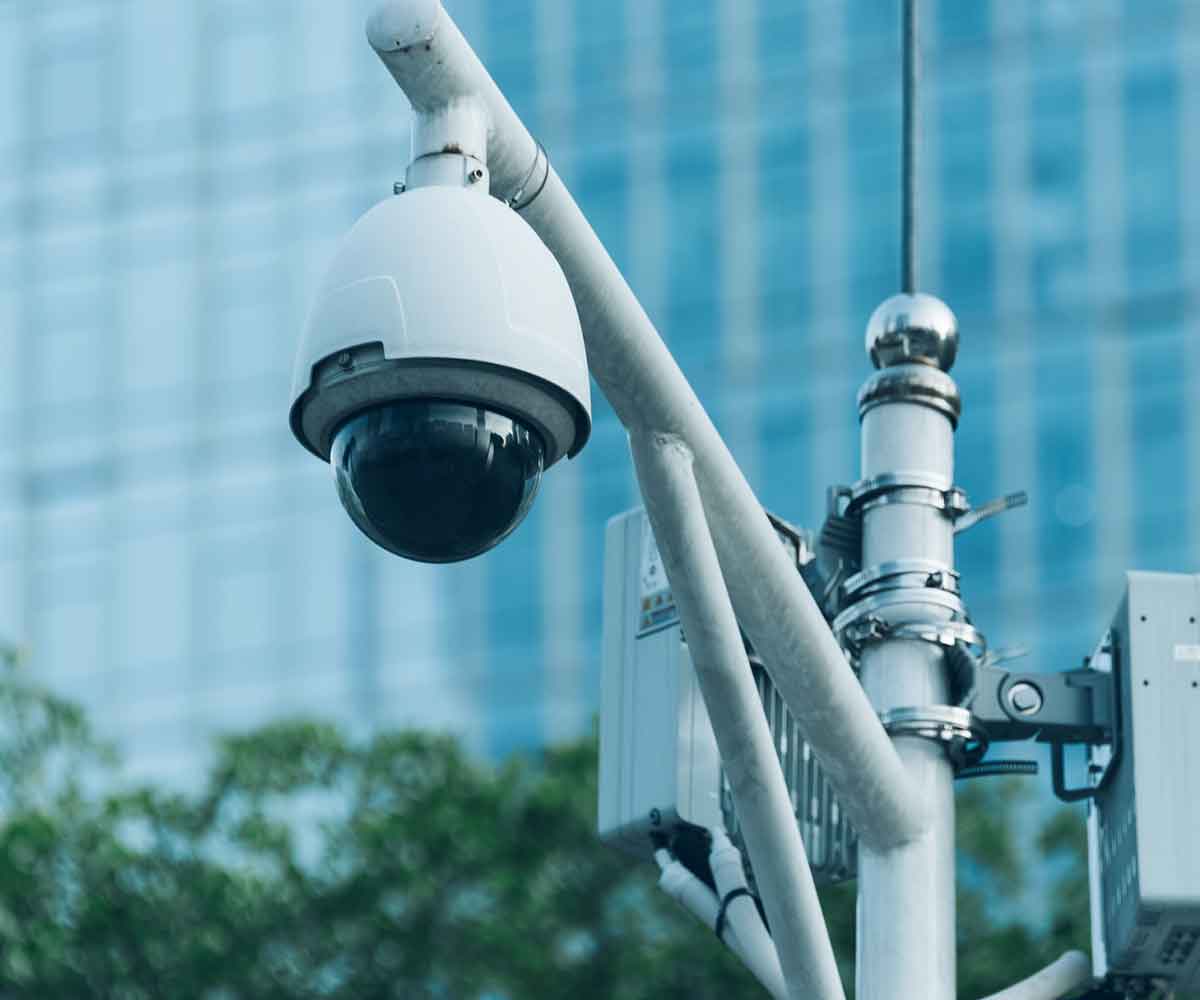
Guide to select the best CCTV camera for your commercial or residential premises

Installing a surveillance security system is excellent. It is often necessary to ensure your home or business and employees’ safety. Regardless of the size of your business, or home, there is one thing that you must never forget is to keep your space safe at all times. Therefore, you must consider installing CCTV cameras in your home or business. For that, you must expect that you should get a fair CCTV camera price offer from a reputed dealer in Lagos. In Lagos, there are countless CCTV camera options available. So it is often tricky to select what you need. We will help you find the best CCTV camera price that you will ever find anywhere in Lagos. We will list down a few factors that you need to look into while choosing a CCTV security camera and the price of such a project.


What will be the coverage capabilities?

How much is the coverage area that your residential or commercial building needs that is the vital factor that decides the nature and price of CCTV cameras you need to install? Advanced 360-degree dome or pan-tilt-zoom camera, and single-camera has the potential to cover all the necessary ground. It can be an ideal solution for many big or small businesses as you won’t have to spend more on multiple cameras, just for crucial entry points.

What will be the resolution quality?

High-resolution CCTV cameras like 5.0 megapixels have 25 times more resolution than analog CCTV cameras. You can add it in your commercial space to keep track of long-distance activities. A lower resolution may be enough for smaller areas where the camera is recording from a shorter distance. We can tailor our recommendations to your budget and resolution requirements.

What will be the place & size where you need to install CCTV Camera?

The place or the location where you want to install the CCTV camera is a vital thing you must consider. It will be the deciding factor that will decide the nature of the CCTV camera you need to install. If you want people to notice that the premise is being monitored, then the best option is to go for box cameras. However, if you want something subtle, then you can consider buying dome cameras. The price of CCTV camera installation can vary based on the nature of the camera you install.

What will be the size of the area where you need to install a CCTV camera?

The area’s size is essential before deciding on the CCTV camera to secure your residential or commercial premises. Knowing your place’s size will help you determine how many cameras you need to ensure your space. The larger the area, the more CCTV cameras you will require. Apart from that, you may need so many additional requirements to achieve a higher level of security.

Is there an issue with the lighting?

Several CCTV camera installation companies in Lagos sell different kinds of CCTV systems. But we provide the most effective CCTV models that fit best to your premises and at the best price. CCTV cameras and its prices vary from one model to another, and most of our product is backed by most advanced features, including the lighting resistance capability.

Do you need audio?

Different CCTV camera models serve other purposes. You can go for the security cameras that do not have audio where you wish to watch people’s movement inside the place of business. But if you need to monitor conversations that we recommend you buy the CCTV cameras with the audio option.

Do not be afraid to inquire about the specification and product description of each CCTV available in Lagos. Keep asking questions, and we will assist you in deciding what model you need to buy. If you have any questions regarding what was discussed, you can contact us anytime.

Get More Local Customers: The Modern Power of Local Services Ads

Is your marketing budget delivering results, or just noise? Many local business owners, from contractors and plumbers to other home service professionals, struggle with one core problem: visibility at the moment it matters. Traditional ads and standard pay-per-click campaigns often waste spend on clicks that don’t convert. You end up paying for traffic that never becomes a call, a booking, or revenue. It’s expensive, unpredictable, and leaves you wondering if there’s a better way to reach customers who are ready to hire now.

The digital landscape, however, is constantly evolving and Google has offered an antidote to this frustration: Local Services Ads (LSAs). LSAs are not just another line item in your marketing plan; they represent a fundamental shift in how local companies connect with high-intent customers, prioritizing trust, verification and results. They function as a pay-per-lead system, ensuring your investment is directly tied to tangible opportunities.

Why local services ads sit at the top of the search results

When a homeowner has a pipe burst or a small business needs an electrician, they don’t scroll past the first few results. They want immediate, trustworthy solutions. This is where LSAs shine.

LSAs are intentionally placed at the very top of the Google search results page, even above traditional Google pay-per-click ads and organic search results. This premium placement ensures increased visibility, guaranteeing that your business is the first thing potential customers see when they search for specific, relevant services like “HVAC repair near me.”

But placement is only half the story. The core value of LSAs lies in their unique payment model. Unlike PPC, where you pay every time a user simply clicks on your ad, the LSA model is performance-based. You only incur a charge when a user converts into a lead, meaning they call your business or send a message directly through the ad unit. This focus on lead generation helps ensure you are paying only for actual prospective customers, making them significantly more cost-effective for local business owners seeking a higher return on investment.

Building instant credibility with the google guaranteed badge

In a world where online scams and unreliable contractors are unfortunately common, consumers prioritize trust above almost everything else. LSAs are built entirely around solving this consumer anxiety through a stringent verification process.

Businesses that advertise through LSAs are designated with either the Google Guaranteed or Google Screened badge. This trust badge is the secret sauce that makes LSAs so powerful. It serves as an immediate, public endorsement, assuring customers that your business has been vetted by Google itself.

The rigorous vetting process

Achieving the Google Guaranteed badge is not automatic; it requires businesses to pass several background checks and verification steps. As Marketing 360 outlines in its detailed guide, this process involves:

  • Business-level verification: Confirmation of your valid business license, insurance and compliance.
  • Owner and employee background checks: These are run on the primary business owner and any employees who enter a customer’s home or property.

This verification is what separates your ad from a typical paid listing. For the customer, seeing the badge means the risk is significantly lower. The guarantee itself often provides a monetary guarantee for the work booked through the ad, further reinforcing consumer confidence. Being screened and qualified gives you an enormous advantage over competitors who rely solely on organic search or standard PPC ads.

The power of verified reviews and lead management

Once a potential customer sees your Google Guaranteed badge and notices your high star rating, they are extremely likely to contact you. Your star rating is determined by verified reviews that are prominently displayed right on the ad. These aren’t just any online reviews; these are reviews specifically linked to customers who found your service through Google and often reflect direct feedback about the quality of the job.

The success of your LSA campaign hinges not just on receiving leads, but on how you handle them. This is where active management and optimization become essential. Using a platform like Marketing 360 allows you to track and manage every incoming lead through a centralized system.

Training your ad for better results

One of the newest and most impactful features involves actively managing the quality of your incoming leads. The cost-per-lead model is only efficient if the leads are qualified. Marketing 360 offers a feature that allows you to directly rate your LSA leads.

Imagine you are a plumbing service. You receive a call lead for a complex sewer line replacement, which is a high-value service and another lead for a distant area you do not service. By actively rating that sewer replacement lead as “Very Satisfied” and marking the out-of-area lead as “Dissatisfied” or disputing it, you are actively training Google’s algorithm. This direct feedback loop helps Google refine its targeting, ensuring future ads are shown to even more relevant customers, thereby optimizing your overall campaign efficiency. This active lead rating process is crucial for long-term success, according to Marketing 360’s latest product updates.


An analytical perspective: why LSAs offer unparalleled roi

From an analytical standpoint, the LSA model fundamentally de-risks digital advertising for service professionals. Consider the traditional marketing funnel:

  1. Awareness: Searcher looks for “plumber.”
  2. Interest/Consideration: Searcher scrolls through organic listings and traditional ads.
  3. Conversion: Searcher clicks an ad (PPC cost incurred) or calls a number.

In a PPC campaign, the cost is incurred at Step 3, whether the resulting call is a legitimate job inquiry or a wrong number.

With LSAs, your investment is pushed further down the funnel, closer to actual revenue. The pay-per-lead structure means the cost is only incurred after the consumer expresses direct intent by initiating contact. This minimizes wasted ad spend and ensures that nearly every dollar spent is allocated to a potential booking.

For a busy contractor, the immediate trust conveyed by the Google Guaranteed badge accelerates the sales process. They spend less time convincing the prospect of their legitimacy and more time discussing the job itself, leading to faster conversions and a superior return on investment compared to other forms of digital marketing.

The choice is clear: stop paying for wasted clicks and start paying only for qualified customer connections backed by Google’s authority.

Ready to put the Google Guaranteed badge to work for your business, own the top of search results and start converting highly-qualified leads? The time for change is now.

Get started today.